
Smaller access.
Precise surgical care.
Minimal Access Surgery is a modern surgical approach that uses small incisions and specialised instruments to perform procedures with less disruption to surrounding tissues. Depending on the condition and the patient's suitability, it may be performed using laparoscopic or robotic techniques.
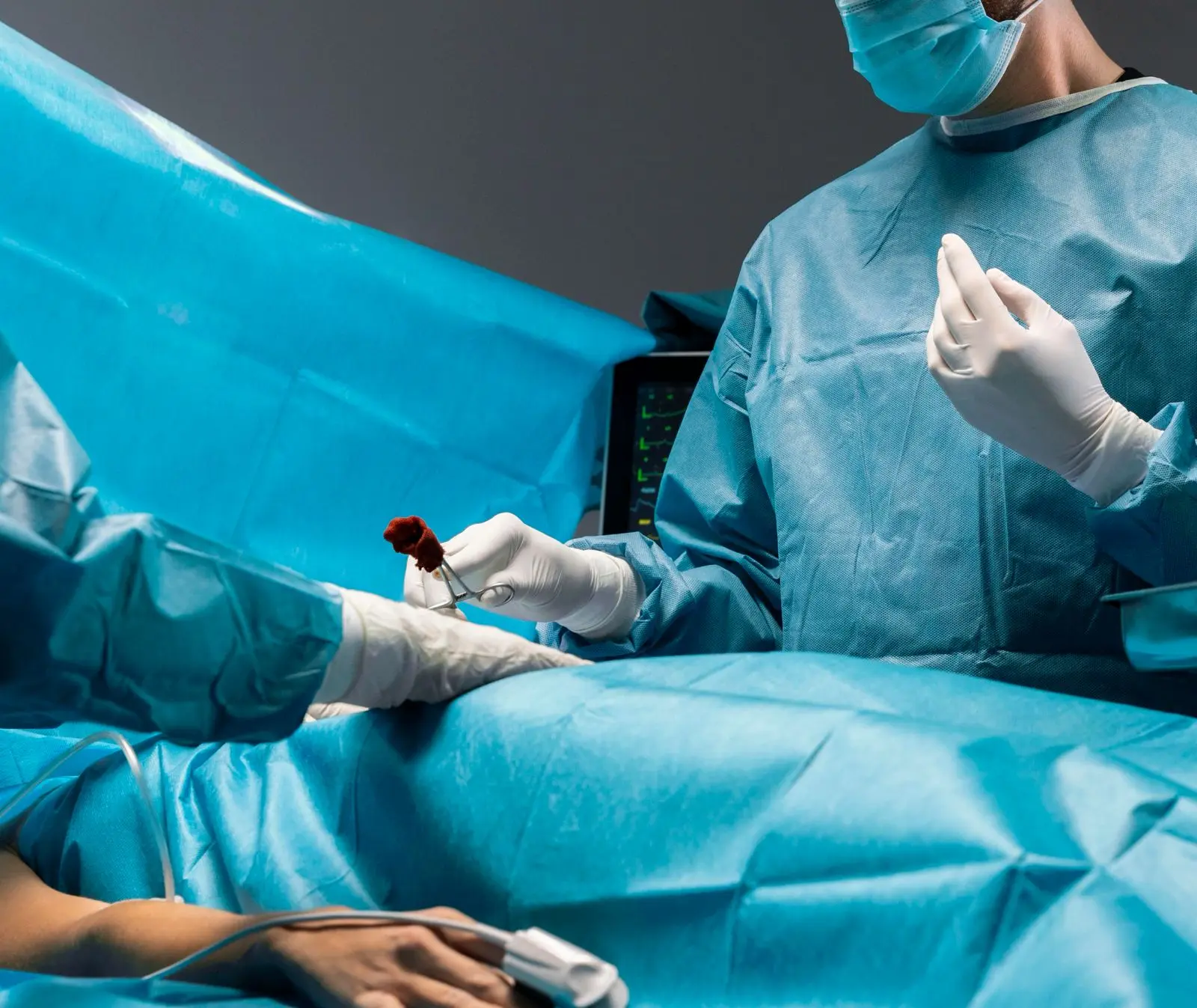
What is Minimal Access Surgery?
Unlike traditional open surgery, which may require a larger incision, minimal access surgery uses smaller openings through which a camera and specialised surgical instruments are introduced.
The surgeon views the operating area on a high-definition screen and performs the required procedure with controlled and precise movements.
Depending on the condition, surgery may be performed using:
- Laparoscopic surgery
- Robotic-assisted surgery
- Other minimally invasive surgical techniques
The choice of technique depends on the disease, its location, complexity and the patient's overall health.
Two approaches to minimally invasive surgery
Both laparoscopic and robotic-assisted surgery aim to treat disease through smaller access points, using different technology to do so.
Laparoscopic Surgery
Laparoscopic surgery is performed through small incisions using a camera and specialised instruments.
The camera provides a magnified view of the surgical area, allowing the surgeon to perform the required procedure through smaller access points.
For appropriate patients, laparoscopic techniques may help reduce incision size and may support a smoother post-operative recovery. However, the outcome and recovery period can vary depending on the procedure and individual health.
Robotic Surgery
Robotic-assisted surgery is another form of minimally invasive surgery that uses specialised robotic technology controlled by the surgeon.
It can provide enhanced visualisation and precise instrument movement during selected complex procedures.
Robotic surgery is not automatically better for every patient. The decision depends on the specific disease, surgical requirements and the surgeon's assessment.
Dr. Vipin Pal Singh has a special interest in Minimal Access Surgery and Robotic Surgery.
What conditions can be treated?
Minimal access surgery may be considered for selected gastrointestinal and hepatobiliary conditions.
Liver
Gallbladder
Bile ducts
Pancreas
Gastrointestinal tract
Selected patients may undergo laparoscopic liver surgery, gallbladder procedures and other GI or HPB operations through minimally invasive approaches.
Not every patient or every condition is suitable for this technique. A detailed evaluation is necessary before deciding the appropriate surgical approach.
Potential benefits of minimal access surgery
For appropriately selected patients, minimally invasive surgery may offer several potential benefits compared with conventional open surgery.
However, these benefits vary depending on the type and complexity of surgery. The primary goal remains safe and effective treatment.
Is minimal access surgery suitable for everyone?
The suitability of minimally invasive surgery depends on several factors, including:
- Type and location of the disease
- Size and extent of the condition
- Previous abdominal surgeries
- Overall health
- Other medical conditions
- Complexity of the required procedure
A specialist consultation helps determine which surgical approach is most suitable for an individual patient.
Minimal access surgery for GI & HPB conditions
GI and HPB surgery can involve complex anatomy and important blood vessels and organs. Therefore, minimally invasive surgery for these conditions requires careful patient selection and detailed pre-operative planning.
This approach allows the surgical team to plan treatment according to the patient's specific condition rather than following a standard approach for every case.
Why choose a specialist for minimal access surgery?
Complex GI and HPB procedures require specialised surgical expertise and appropriate technology.
For patients searching for laparoscopic surgery in Lucknow, minimal access surgery in Lucknow or a liver surgeon in Lucknow, specialist evaluation is important to understand whether minimally invasive surgery is appropriate for their condition. The decision should always be based on the patient's medical needs rather than simply choosing the smallest possible incision.
Dr. Vipin Pal Singh
Dr. Vipin Pal Singh is a Liver Transplant & HPB Surgeon and Associate Director – HPB Surgery & Liver Transplant at Chandan Hospital, Lucknow. He holds MBBS, MS and DrNB qualifications in Surgical Gastroenterology and has completed a Fellowship in Liver Transplant & HPB Surgery.
With more than 8 years of experience, Dr. Vipin Pal Singh has experience in complex GI and HPB surgeries. His areas of specialisation include liver transplantation, liver cirrhosis, liver cancers, gallbladder and bile duct cancers, pancreatic conditions and minimally invasive surgery.
Book Consultation →Questions patients often ask
Minimal access surgery uses smaller incisions through which a camera and specialised instruments are introduced. Depending on the condition, it may include laparoscopic or robotic-assisted surgery.
Both are minimally invasive approaches. Laparoscopic surgery uses specialised instruments through small incisions, while robotic-assisted surgery uses robotic technology controlled by the surgeon. The appropriate approach depends on the disease, procedure and individual patient.
For appropriately selected procedures and patients, minimally invasive surgery may support a smoother recovery and potentially shorter hospital stay. Recovery varies depending on the procedure and individual health.
No. Suitability depends on the disease, its location and complexity, previous surgeries, overall health and other medical factors. A specialist evaluation is necessary.
Selected patients may undergo laparoscopic liver surgery. Whether this approach is appropriate depends on the specific liver condition, its location and complexity and the patient's overall health.
No. Robotic surgery is not automatically better for every patient. The surgical approach should be selected according to the disease, surgical requirements and the surgeon's assessment.
Could minimally invasive surgery be right for you?
If you have been advised surgery for a liver, gallbladder, bile duct, pancreas or gastrointestinal condition, a specialist consultation can help determine whether minimal access surgery is an appropriate option for you.
Liver Transplant & HPB Surgeon
Associate Director – HPB Surgery & Liver Transplant
Chandan Hospital, Lucknow