
Precision through
advanced robotic surgery.
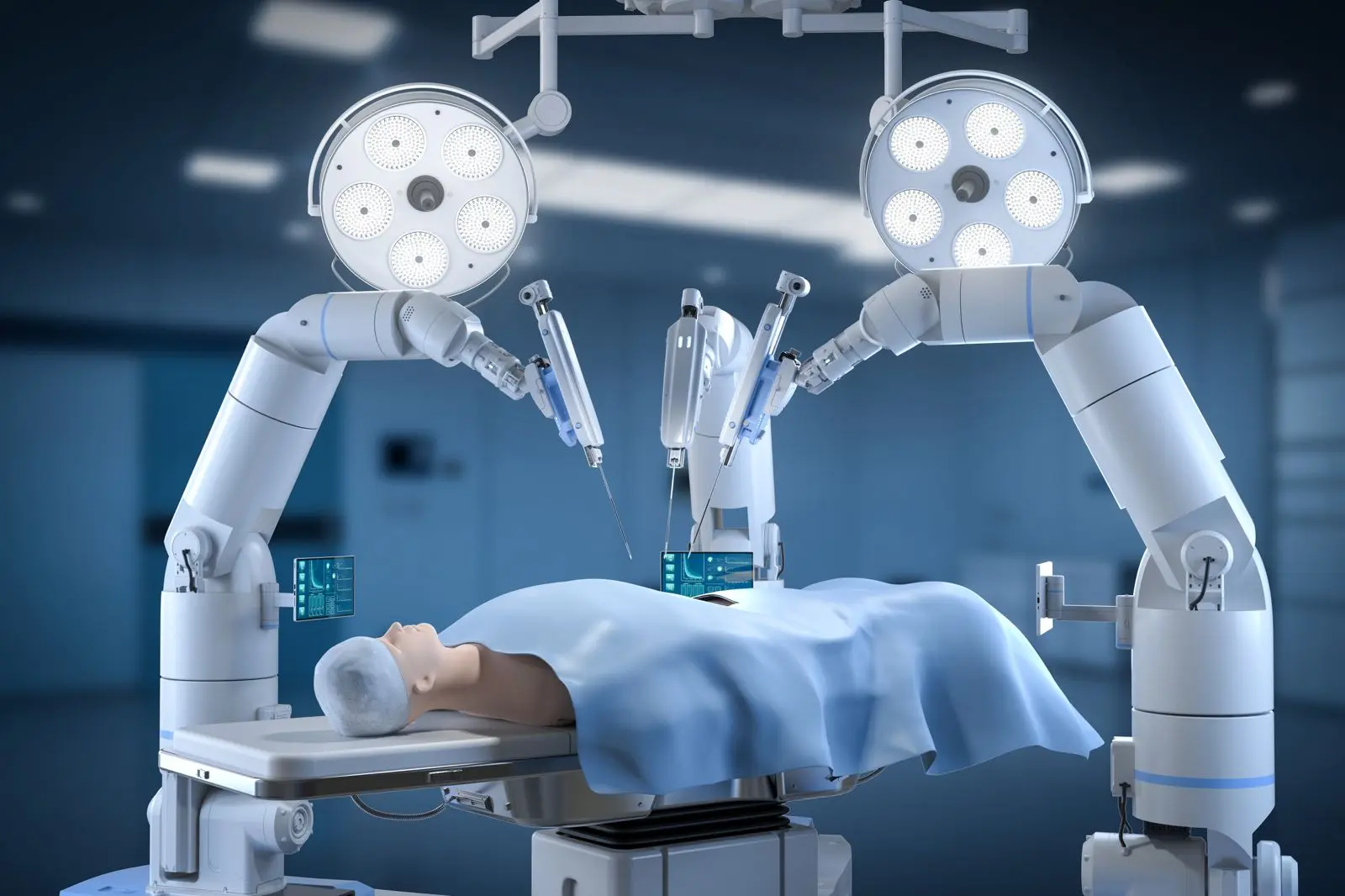
Robotic Surgery is an advanced form of minimally invasive surgery that allows a surgeon to perform selected complex procedures using specialised robotic technology. The system provides enhanced visualisation and precise instrument control while the surgeon remains in complete control of the procedure.
For selected gastrointestinal and HPB conditions, robotic-assisted surgery may be considered depending on the patient's condition and the complexity of the procedure.

What is robotic surgery?
In robotic-assisted surgery, the surgeon operates through small incisions using specialised instruments attached to a robotic surgical system.
A high-definition, magnified view of the operating area helps the surgeon visualise important anatomical structures. The robotic instruments are designed to provide controlled and precise movements during selected procedures.
Importantly, the robot does not perform the surgery independently. The surgeon controls the robotic system throughout the procedure.
How does robotic surgery work?
Small Incisions
Specialised instruments are introduced through small access points.
High-Definition Visualisation
A magnified view helps the surgeon visualise the operating area and important anatomical structures.
Surgeon-Controlled Instruments
The surgeon controls the robotic system and performs the procedure using specialised instruments.
Precise Surgical Movement
The robotic instruments allow controlled movements during selected complex procedures.
What conditions can be treated with robotic surgery?
Robotic surgery may be considered for selected gastrointestinal and HPB conditions.
Liver
Gallbladder
Bile ducts
Pancreas
Gastrointestinal tract
The suitability of robotic surgery depends on factors such as the location and extent of the disease, previous surgeries, overall health and the complexity of the required procedure.
Not every patient or every operation is suitable for a robotic approach.
Advanced technology for selected complex procedures.
GI and HPB procedures can involve complex anatomy and structures that require careful surgical planning.
For selected patients, robotic-assisted techniques can be used for certain HPB surgery and gastrointestinal procedures.
The approach may provide the surgeon with enhanced visualisation and precise instrument control during appropriate operations.
Before recommending robotic surgery, the surgeon evaluates the patient's diagnosis, imaging, medical history and overall health to determine the most suitable surgical approach.
Potential benefits of robotic surgery
For appropriately selected patients, robotic-assisted surgery may offer several potential advantages associated with minimally invasive procedures.
Benefits vary according to the procedure and individual patient. Robotic surgery is not automatically the best option for every condition.
Robotic surgery vs open surgery
Open surgery uses a larger incision to access the surgical area, while robotic surgery is performed through smaller access points using specialised instruments.
Robotic-Assisted Surgery
- Smaller access points
- Specialised robotic instruments
- High-definition magnified visualisation
- Surgeon-controlled instrument movement
- Minimally invasive approach for selected procedures
Open Surgery
- Larger incision
- Direct access to the surgical area
- May be appropriate for certain complex conditions
- Can be the safer or more suitable option in selected cases
For selected procedures, a minimally invasive approach may provide benefits such as smaller incisions and potentially easier recovery.
However, some complex conditions may still require open surgery.
Is robotic surgery suitable for everyone?
The decision to perform robotic surgery in Lucknow depends on several factors, including:
- Type of disease
- Location and size of the lesion or tumour
- Extent of disease
- Previous abdominal surgeries
- Overall health
- Other medical conditions
- Complexity of the procedure
A detailed consultation and appropriate imaging are necessary before deciding whether robotic surgery is suitable.
Why choose a specialist for robotic surgery?
Advanced technology is only one part of complex surgery. Proper patient selection, surgical planning and specialist experience remain essential. For patients looking for a robotic surgeon in Lucknow, the treatment approach should be selected according to the individual condition and surgical requirements.
This allows the surgical team to determine whether robotic, laparoscopic or open surgery is the most appropriate option.
Dr. Vipin Pal Singh
Dr. Vipin Pal Singh is a Liver Transplant & HPB Surgeon and Associate Director – HPB Surgery & Liver Transplant at Chandan Hospital, Lucknow. He holds MBBS, MS and DrNB qualifications in Surgical Gastroenterology and has completed a Fellowship in Liver Transplant & HPB Surgery.
With more than 8 years of experience, Dr. Vipin Pal Singh has experience in complex GI and HPB surgeries. His areas of specialisation include liver transplantation, liver cirrhosis, liver cancers, gallbladder and bile duct cancers, pancreatic conditions, Minimal Access Surgery and Robotic Surgery.
Questions patients often ask
Robotic surgery is an advanced form of minimally invasive surgery in which the surgeon controls specialised robotic instruments through small incisions. The system can provide enhanced visualisation and precise instrument control during selected procedures.
No. The surgeon remains in complete control of the robotic system throughout the procedure.
Robotic surgery may be considered for selected gastrointestinal and HPB conditions involving areas such as the liver, gallbladder, bile ducts, pancreas and gastrointestinal tract.
Not necessarily. Robotic surgery is not automatically the best option for every patient. The appropriate approach depends on the disease, its extent, the complexity of the procedure and the patient's overall health.
No. Patient selection is important. Previous surgeries, disease location and extent, overall health and the complexity of the required operation are among the factors considered.
For selected procedures, robotic surgery may support the potential benefits associated with minimally invasive surgery, including potentially easier recovery. Recovery varies according to the procedure and individual patient.
For selected patients, robotic-assisted techniques may be considered for certain HPB and gastrointestinal procedures. The suitability depends on the individual diagnosis and surgical requirements.
Could robotic-assisted surgery be right for you?
If you have been advised surgery for a liver, gallbladder, bile duct, pancreas or gastrointestinal condition, a specialist consultation can help determine whether robotic-assisted surgery is an appropriate option for you.
Liver Transplant & HPB Surgeon
Associate Director – HPB Surgery & Liver Transplant
Chandan Hospital, Lucknow